What is the highest temperature resistance of PTFE (Teflon) coatings?
Let us learn the highest temperature resistance of
PTFE (Teflon) coatings?
PTFE (Teflon) coatings are widely used in industry and daily life due to their unique properties, among which high-temperature resistance is one of their important characteristics. So, what is the
highest temperature resistance of PTFE (Teflon) coatings?
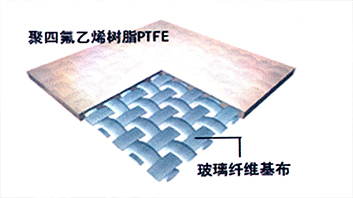
PTFE (Teflon) coating is a polymer coating material, the main component of which is usually polytetrafluoroethylene (PTFE) and other fluorocarbon resins. Generally speaking, standard-grade PTFE (Teflon) coatings can be used safely and continuously at around 260℃. This is because within this temperature range, the molecular structure of the PTFE (Teflon) coating remains relatively stable, and its excellent non-stick and corrosion-resistant properties are maintained. For example, the PTFE (Teflon) coating on our everyday non-stick pans generally does not exceed 260℃ under normal cooking temperatures, allowing for safe use and long-term maintenance of its non-stick effect.
However, under certain special circumstances, PTFE (Teflon) coatings can withstand even higher temperatures. Reinforced PTFE (Teflon) coatings have higher thermal stability, capable of withstanding temperatures above 288℃, and even reaching an extreme temperature of 327℃. This high-temperature resistance makes reinforced PTFE (Teflon) coatings suitable for demanding industrial environments, such as baking equipment, oven walls, and heat-sealing machines. In these applications, the PTFE (Teflon) coating needs to maintain stable performance at high temperatures to ensure proper equipment operation and product quality.
While PTFE (Teflon) coatings possess a certain degree of high-temperature resistance, their performance is affected when temperatures exceed their tolerance range. For example, at temperatures above 260°C, the PTFE (Teflon) coating may gradually degrade, releasing harmful gases. If the temperature continues to rise, reaching or exceeding PTFE (Teflon)'s melting point (approximately 327°C), the coating may melt, deform, or even break and peel off, losing its original function.
The temperature resistance of PTFE (Teflon) coatings is also affected by other factors, such as coating thickness and the chemicals present in the environment. Thicker coatings may offer better thermal stability but increase cost and application difficulty. In environments with certain chemicals, the temperature resistance of the PTFE (Teflon) coating may decrease because these chemicals may react with the coating, damaging its molecular structure.
The maximum temperature resistance of PTFE (Teflon) coatings varies depending on the coating type, with standard grades typically around 260℃ and reinforced grades reaching around 327℃. However, in practical use, to ensure the performance and safety of the PTFE (Teflon) coating, it should be avoided to expose it to environments approaching or exceeding its temperature limit for extended periods. Understanding the temperature resistance of PTFE (Teflon) coatings helps us correctly use and maintain related products in different application scenarios, fully leveraging the advantages of PTFE (Teflon) coatings.